
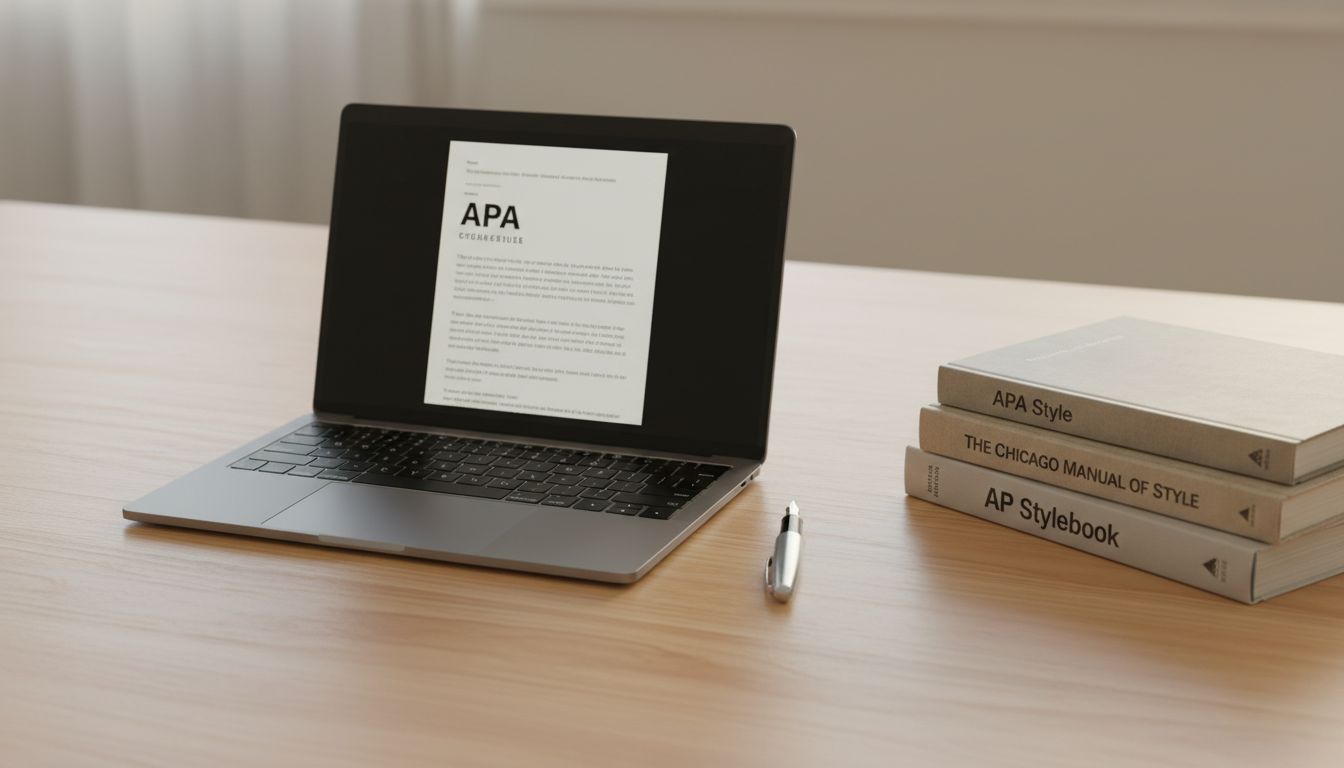
One tiny word can slow down a whole draft. If you’ve ever paused mid-headline and thought, “Do I capitalize to?”, you’re not alone.
Here’s the reliable answer for capitalize to in title questions on title case capitalization: in APA, Chicago, and AP title case, to is usually lowercase, unless placement or grammar forces a capital. The details are simple once you see the patterns.
The rule for “to” in APA style, Chicago Manual of Style, and AP style (and where each uses title case)
Before you decide on to, confirm the capitalization system you’re using. APA style, the Chicago Manual of Style, and AP style do not apply title case in the same places. (MLA style, for comparison among major style guides, defaults to sentence case for most titles.)
For APA style’s official rule wording from the Publication manual, see APA’s title case capitalization guidance. For quick, practical summaries, these pages help: APA Title Case Rules 7th Edition and Chicago Manual title case rules. If you’re writing headlines, keep AP Style title capitalization rules handy.
Here’s the context that matters most:
| Style guide | What it typically uses for titles/headings | Where sentence case shows up most often |
|---|---|---|
| APA (7th, current in 2026) | Title case for paper titles, headings, table and figure titles | Sentence case for most reference list entry titles (articles, webpages, reports) |
| Chicago Manual of Style (CMOS, current editions) | Title case (headline style) for most titles and headings | Sentence case is more of a house-style choice, not the default for formal titles |
| AP (Stylebook, current editions) | Title case for headlines and many display titles | Sentence case is not the normal AP style headline approach |
Now, the rule for to itself:
- Lowercase “to” when it’s a preposition under Prepositions (“Keys to the City”) or the infinitive marker under Infinitive (“How to Edit Faster”).
- Capitalize “To” when it’s the first and last word of the title or subtitle in title case capitalization.
- Capitalize “To” when it’s acting as an adverb (rare, but real), as in “Pull the Door To” (meaning “shut”).
If you want a broader comparison of headline systems, AP vs Chicago title case differences gives a quick side-by-side, and this editor’s overview of cross-guide quirks is also useful: title style capitalization breakdown.
If you’re using title case and “to” sits in the middle, it’s almost always lowercase. Position changes everything.
A 10-second checklist you can apply on any draft
Use this fast pass for capitalization rules when you’re proofreading titles:
- First word? Capitalize it, even if it’s To.
- Last word? Capitalize it, even if it’s to.
- After a colon? Capitalize the first word of the subtitle, even if it’s To.
- Middle of the title? Lowercase to (a preposition) in almost all cases; other parts of speech like nouns and verbs or pronouns and adverbs are typically capitalized. Some styles capitalize prepositions with four or more letters, which is why to remains lowercase.
- Is “to” an adverb meaning “shut”? Capitalize To (example: “Pull the Door To”).
- Are you in APA references? Remember most titles in a reference list use sentence case, so you’ll write something like “How to write a strong abstract” (only the first word and proper nouns get caps).
AP headline rules can also trip writers who switch from academic writing. This overview helps if you need a refresher: AP style rules and conventions.
80 copy-paste examples (grouped by pattern)
These rules for lowercase and uppercase treatment of “to” apply to book titles and other composition titles. Unless a row starts with To, ends with To, or begins a subtitle after a colon, “to” stays lowercase in APA, Chicago, and AP title case.
“How to …” titles (12)
| Copy-paste title (APA, Chicago, AP) |
|---|
| How to Write a Strong Abstract |
| How to Format Tables to Match APA |
| How to Edit Blog Posts to Sound Natural |
| How to Pitch Editors to Get a Reply |
| How to Train Your Eye to Catch Typos |
| How to Turn Notes to a Clear Outline |
| How to Shift From Draft to Revision |
| How to Learn Grammar to Write Better |
| How to Cite Sources to Avoid Plagiarism |
| How to Use Headings to Guide Readers |
| How to Rewrite Sentences to Cut Fluff |
| How to Title Articles to Boost Clarity |
Infinitive phrases inside titles (12)
| Copy-paste title (APA, Chicago, AP) |
|---|
| Ways to Improve Clarity in One Edit |
| Plan to Publish Without Panic |
| Learn to Paraphrase Without Changing Meaning |
| Steps to Reduce Jargon in Marketing Copy |
| A Method to Outline Essays Fast |
| Tricks to Remember Citation Order |
| A Guide to Proofread Like an Editor |
| Prompts to Break Writer’s Block |
| Habits to Keep Research Organized |
| Tools to Track Sources While Writing |
| Rules to Follow to Stay Consistent |
| Tips to Revise Paragraphs With Purpose |
“A to B” ranges and bridges (10)
| Copy-paste title (APA, Chicago, AP) |
|---|
| From Idea to Outline in 15 Minutes |
| From Notes to Thesis in One Session |
| From Draft to Done Before Friday |
| From Topic to Title in Three Moves |
| From Data to Story for Nonexperts |
| From Quote to Analysis Without Padding |
| From Class to Career in One Year |
| From Paper to Presentation With Confidence |
| From Confusion to Clarity About Citations |
| From Research to Results Without Overwriting |
Subtitle capitalization (12)
| Copy-paste title (APA, Chicago, AP) |
|---|
| Better Headings: How to Keep Readers Moving |
| Paper Titles: When to Use Title Case |
| Proofreading Tips: What to Fix First |
| Strong Arguments: How to Support Each Claim |
| Editing Workflow: From Draft to Final |
| Citation Basics: When to Add Page Numbers |
| Research Plans: How to Pick a Method |
| Paragraph Structure: How to Avoid Run-Ons |
| Blog SEO: How to Name Posts Clearly |
| Study Skills: How to Review Notes Fast |
| Style Guides: To Capitalize or Not |
| Revision Strategy: To Cut or To Expand |
Titles starting with “To” (10)
| Copy-paste title (APA, Chicago, AP) |
|---|
| To Write Better Introductions |
| To Edit Faster, Read Aloud |
| To Learn APA, Start Small |
| To Publish on Time, Plan Ahead |
| To Avoid Bias, Define Terms |
| To Improve Flow, Vary Sentence Length |
| To Cite a Webpage Correctly |
| To Fix Fragments, Add a Verb |
| To Make Headlines Clear |
| To Keep Sources Organized |
Titles ending with “to” (capitalize it because it’s last; often part of phrasal verbs; hyphenated words containing “to” follow similar logic) (12)
| Copy-paste title (APA, Chicago, AP) |
|---|
| The Checklist You’ll Come Back To |
| A Rule Worth Holding On To |
| The Habit Most Writers Forget To |
| The Standard You Should Stick To |
| The Source You Need to Refer To |
| A Simple System to Return To |
| The Template Students Like to Copy To |
| A Style Choice to Commit To |
| The Draft You’re Ready to Send To |
| The Line You Don’t Want to Cut To |
| The Point You Keep Coming Back To |
| A Promise It’s Smart to Keep To |
Mixed small-words (articles, conjunctions, and “to”) (12)
| Copy-paste title (APA, Chicago, AP) |
|---|
| A Guide to the Parts of a Paper |
| The Fast Way to a Clean Revision |
| Tips for Writing in a Tight Space |
| Notes on When to Use “and” |
| The Difference Between “to” and “too” |
| A Plan for Editing at the Last Minute |
| What to Do in the Final Hour |
| How to Write for a Real Audience |
| Rules for Titles in APA and AP |
| A Shortcut to Better Flow in Paragraphs |
| When to Cut a Word or Two |
| The Key to Clean, Simple Titles |
Conclusion
When you follow consistent capitalization rules from one set, titles stop feeling like guesswork. This approach maintains professional standards in academic writing. In APA, Chicago, and AP title case, “to” is lowercase almost everywhere, except first, last, or right after a colon. While these rules apply to headings, in-text citations have different requirements. Keep the checklist nearby, and copy any example above as a starting template. Mastering these specific style guides improves your document’s overall authority. Clean titles don’t just look nice; they signal control before readers even reach your first sentence.

